The Martial Movements Method
A personal approach tapping into centuries-old martial arts wisdom and modern kinesiology
"Let us go back to the old, but with sharper scientific thoughts and the most beautiful modern energy."
Agesilao Greco (Fencing Master) 1907
- Combining knowledge from traditional Asian and European martial arts to modern exercise and rehabilitation science
- Not a franchise or commercial program - a worldview based on personal development
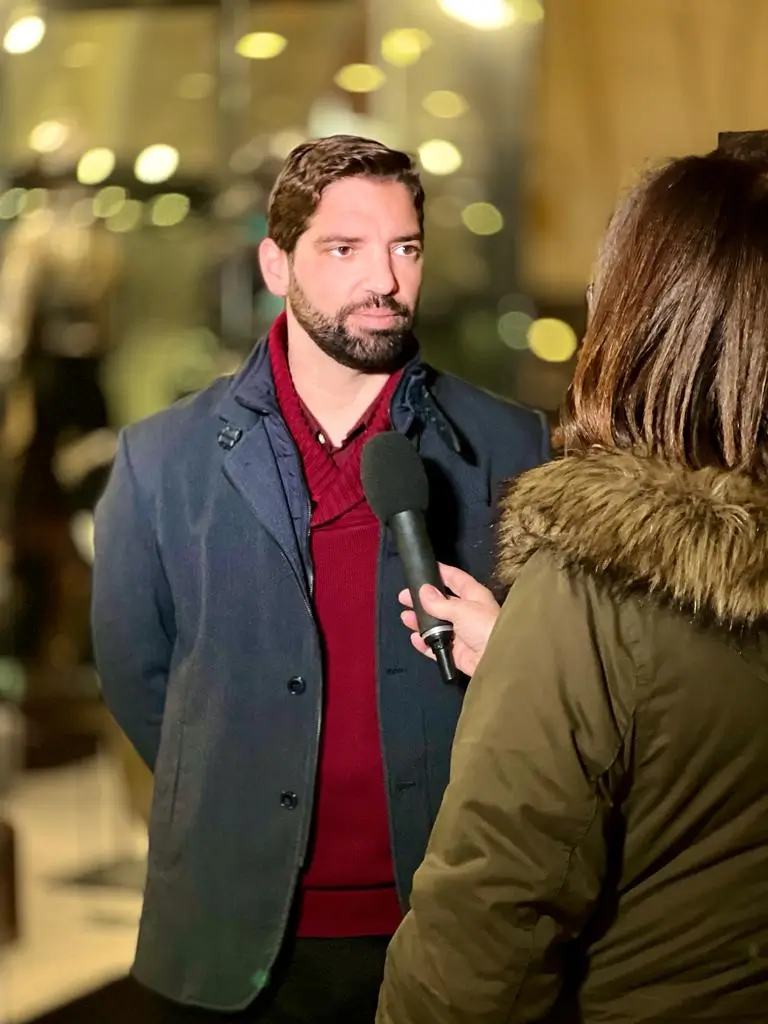
Hey! I am Franco Davies
Physiotherapist | Founder of Body Mechanics
Franco is a musculoskeletal physiotherapist. Qualifying in 2001, he is experienced in a variety of clinical areas, working as a senior in neurology, MSK, Orthopaedics and finally in Emergency within the Malta NHS, and working privately in elderly care, sports and general MSK. He is a member of the Society Of Musculoskeletal Medicine where he obtained his MSc, after which he has done a number of published research projects.
Meanwhile, he embarked on an MA in Hospitaller Studies in 2014 and has published a number of historical papers and a book titled Swords of the Religion in 2022. This was a result of his interest in the martial arts through his professional background and in the wisdom history can give us; diving deep into the source of our modern day activities.
Martial movements is all about Franco's experiences through his prism from working with the human body as a physiotherapist, experiencing the movements through martial arts, and studying origins through history, giving a unique worldview to his practice. This is combined with his long hands-on experience with people at different levels of injury and recovery and his ability to pass on motivation and resilience to ultimately get better!
Main influence is Historical Fencing
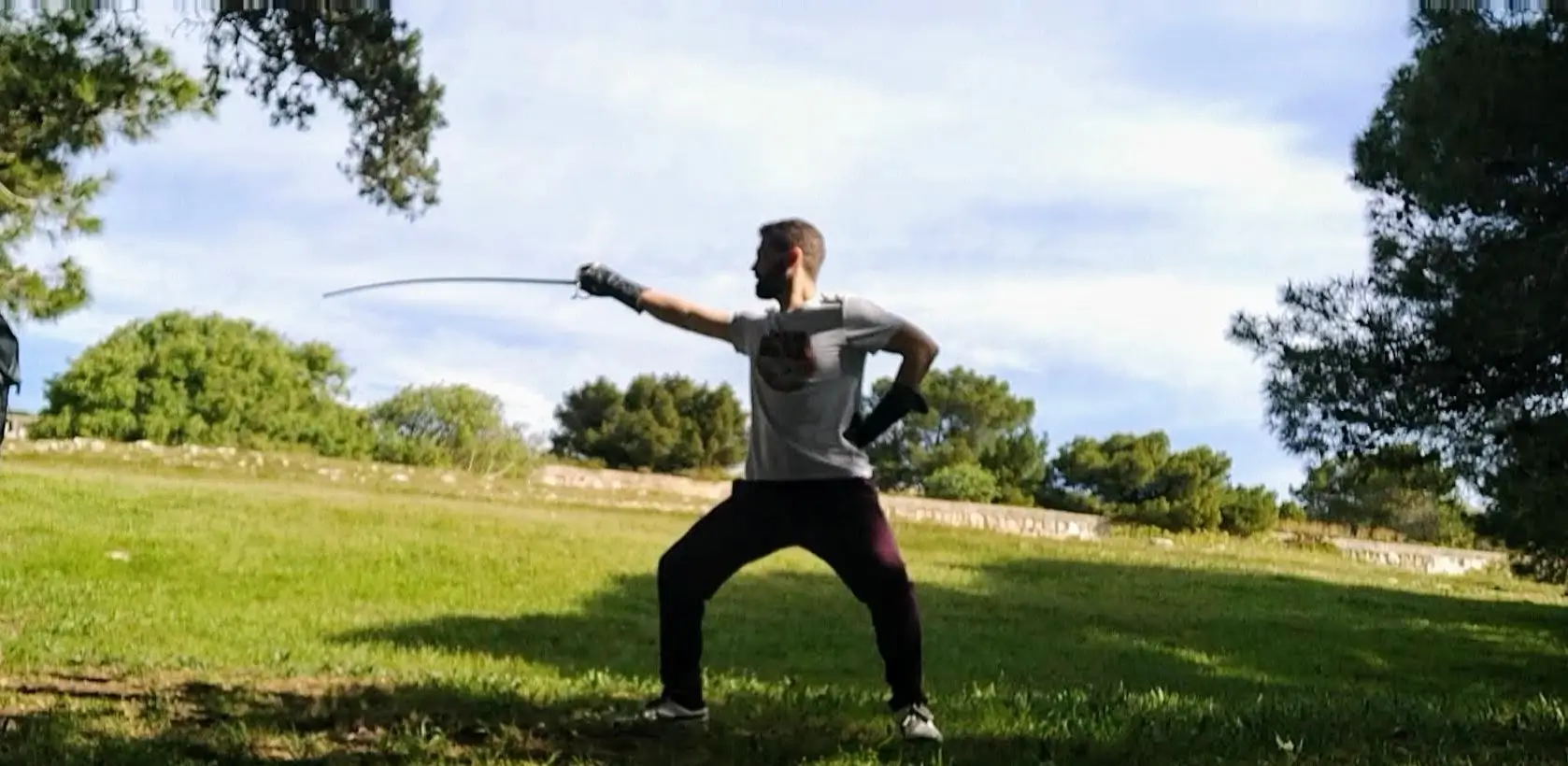
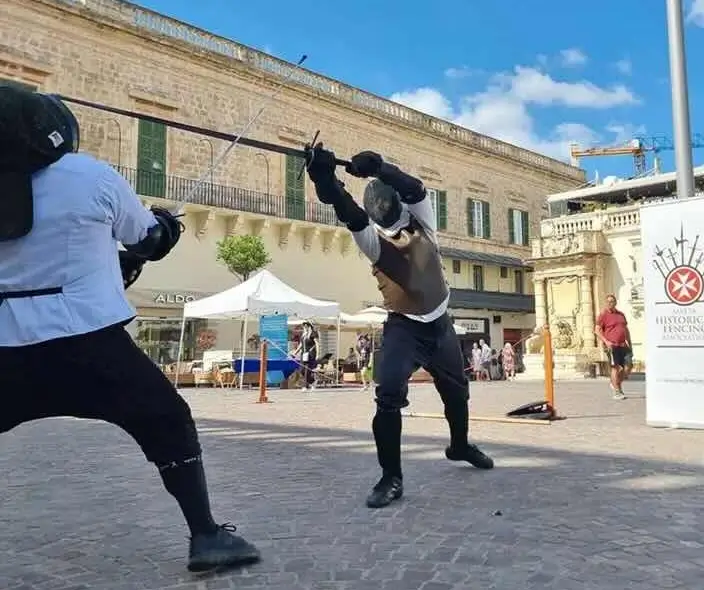
- Starting martial arts since 1994 with Japanese ju-jitsu and moving on to historical fencing in 2006, martial movements developed alongside the Physiotherapy journey which started in 1997
- Similarities in human movement where explored from the beginning, whether it was for combat or rehabilitation but with the start of historical fencing (nowadays called HEMA) this intensified.
- This fusion intensified during 2020, when, with more time to reflect, the relationship between the three aspects; the martial, the medical, and the historical occurred.
- Modern concepts on movement and exercise were discovered in the strong bedrock of martial arts training and influenced heavily on Body Mechanics' practice, which is seen in the tools used and the logo itself
The Four Virtues
The four virtues of the warrior by Fiore dei Liberi (Flos Duellatorum, 1410) are outrightly applied to European martial training. But typical of martial arts, it represents centuries of perfecting human movement to achieve perfection as near as possible so as to survive in a life or death situation.
Martial arts are so intensely related to human movement and body mechanics, that they cannot be without the other two. The application of the principles of such, and even more boldly from such a distant past may appear too bold to be applied to rehabilitating the modern body in a modern context.
But, there is only one complex human body and it has not changed in the past centuries. Rather than rediscovering the wheel, one can learn from the past on how to achieve perfect human movement and apply it to modern science, particularly kinesiology.

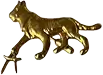
The Lynx
(Prudence)
Wisdom and careful judgment
- Wisdom
- Strategy
- Judgment
Strategic thinking and decision-making
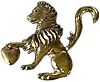
The Lion
(Audacity)
Courage and boldness
- Courage
- Confidence
- Motivation
The courage to face challenges head-on

The Elephant
(Fortitude)
Strength and endurance
- Strength
- Endurance
- Resilience
Physical and mental resilience

The Tiger
(Celerity)
Speed and agility in movement
- Speed
- Agility
- Coordination
The neurological aspect, moving well and fast